Showing posts with label health tips. Show all posts

Saturday, February 25, 2017

Tips for Boosting Your Fiber Intake

Have you been hearing about fiber a lot lately? Most Americans are not getting the recommended intake for fiber, which can be preventative against diseases like diabetes, diverticulitis and certain types of cancer. Low fiber intake is mainly related to the fact that many do not consume enough fruits, vegetables, and whole grains.

What is Fiber?
Dietary fiber is the indigestible component of plant foods, while functional fibers are isolated non-digestible carbohydrates that can be extracted from natural sources or manufactured synthetically and added to foods/supplements. There are two types of fiber that can be found in food sources: soluble (which absorb water during digestion) and insoluble fiber (which remain unchanged during digestion). Soluble fiber is found in foods like oats, barley, beans, peas, nuts, seeds, citrus fruits, apples, and carrots. Soluble fiber may help to lower cholesterol, reduce your risk of heart disease, and regulate blood sugar levels. Insoluble fiber is found in foods like seeds, vegetables, whole grains, and the skins of fruit. Insoluble fiber aids the digestive system in maintaining regularity and may reduce the risk of colon cancer.

What is the Recommendation?
As per the new 2015 Dietary Guidelines, the recommended fiber intake for women ages 19-30 years old is 28g per day and for males 34g per day. Aiming for about 3-4 servings of fruit and 4-5 servings of vegetables each day can help you to boost your fiber intake to the recommended values.

Top 10 Ways to Increase Fiber (Without Supplements)
1. Read food labels and look for products with at least 3g of fiber per serving.
2. Eat whole fruit over juices. Juices are stripped of their fiber and antioxidant content.
3. Substitute meat dishes (chili, soups, stir-fries) with beans! One-half cup of chickpeas has 8g of fiber!
4. Choose whole grain varieties over refined counterparts (i.e. 100% whole wheat pasta for white).
5. Swap white rice (0g fiber) for quinoa (1/2 cup = 2.5g fiber).
6. Snack on fresh fruits like oranges, which have 3g of fiber and raspberries, which have 8g of fiber per cup.
7. Keep the skins on your fruits and veggies when possible to retain all of the fiber. A medium sweet potato with the skin on contains 4g of fiber!
8. Power-up your breakfast with oatmeal (1/2 cup dry = 4g fiber) + nuts (1-ounce almonds = 3.5g fiber) + flax or chia seeds (1 tablespoon = 4g fiber) + fresh fruit. 
9. Power-up salads with fresh veggies, beans, and seeds.
10. Power-up sandwiches by choosing a high-fiber bread and topping with avocado (1/2 cup = 5g fiber) instead of mayo.

While it may seem impossible to get enough fiber in the day, you can start by making simple swaps. Try using whole grain bread versus white or swapping in spiralized zucchini for a pasta base. Making small changes can help you to form new and healthy habits. One thing to remember when increasing your fiber intake is to drink plenty of fluids. Also, increase your intake slowly to avoid GI discomfort.


Reference: https://health.gov/dietaryguidelines/2015/resources/2015-2020_Dietary_Guidelines.pdf

Monday, July 14, 2014

Quick Start Guide to Healthy Eating

Over the past month, I have been leading nutrition counseling sessions pretty much every day. Go me :) I am loving all the experience and different situations in a community-based setting. Almost 90% of my sessions will include some version of this phrase/question, "My doctor told me XYZ, and I need to _____ (lose weight or change my eating habits) and I don't know what I should be eating." If you are a health professional, you have probably heard this a few times along with "Can you write me a diet/menu plan?" Just a comment on the diet/menu plan, I rarely ever give someone a diet/menu to follow. My sessions are geared towards giving my clients/members the tools they need to choose healthy foods. It gets boring eating the same foods all of the time, so it is important for people to be able to have enough knowledge to change up what they eat in a healthy way.

Below, are my tips for someone looking to change their eating habits or embark on a healthy lifestyle journey!

Tip #1
Rid yourself of the word "diet" and replace it with "a healthy lifestyle." When you go "on a diet," you are likely to "go off of the diet."  It is better to work towards a balance where you are able to enjoy the foods you love and incorporate healthy and/or new foods.

Tip #2
Write down everything you eat for 1-2 days. Be honest with yourself and don't change what you are eating just so it looks good on paper. I have asked many clients/members for food logs and diaries. Sometimes, I look through someone's diary and think "it looks like they eat pretty healthy." Then, I'll ask the burning question, "Is this a typical day for you?" The response is usually, "These were days that I was trying to be good." I don't want those days! Then, I will find out they have a habit of eating a bag of Cheetos at night and 2 ice cream cones. Now, that is something we can work with!

Tip #3
Start by analyzing your current eating/health patterns. Look over your food log and ask yourself these questions:
 _1_ Which macronutrient (carbohydrates, fats, proteins) makes up the majority of my meal? Most of
 the clients/members in my sessions get their calories from carbohydrates (most of them
 being refined). A lot of them are also not getting enough protein or healthy fats in their diet either.
 _2_ Am I drinking enough water? (91 oz (11 glasses) for women and 125 oz (15.5 glasses) for men)
 _3_ Am I drinking my calories in the form of sugar-sweetened beverages? How many glasses/day?
 _4_ How much sugar am I consuming?
 _5_ Do I snack more often than eat a meal? Are these healthy snacks?
 _6_ Do I skip meals? If yes, why? Is there anything I can do to help avoid skipping meals?
 _7_ How many servings of vegetables am I eating per day?
 _8_ How many servings of fruit am I eating per day?
 _9_ Am I getting enough fiber?
 _10_ Am I active every day?
Tracking your food will help you to be more mindful of what you are eating and can help significantly with those trying to lose weight.

Tip #4
After answering all of the questions in Tip #3, think about where you want to start. Maybe you will start by cutting up fruits and vegetables so they are readily available for a snack (instead of cookies). Maybe you will start by tracking what you eat for a week to become more mindful of what you are eating. It doesn't matter where you start, just pick one thing to work on a go from there.

Tip #5 (for the limited water drinkers)
If you are one of those people who dislike the taste of water (heard that a few times in my sessions), then make water fun! Put slices of fresh fruit (limes, lemons, strawberries, watermelon) in water. You could also put fresh fruit in seltzer (most of them are 0 calorie, 0 sugar). Try fresh brewed hot or cold tea. There are tons of tea flavors you can choose from! You can also try the fresh fruit in the hot tea (I love lemons in hot black tea). For those of you who have a lot of sugary beverages, you can also try replacing one of those per day with some of the examples I gave.

Tip #6 (for the snackers)
If you are an excessive snacker, the first thing to do before eating a snack is ask yourself, "Am I really hungry?" If you are feeling hungry, you make not be getting enough protein and healthy fats in your last meal, so check back to question #1's answer you wrote down. One strategy could be to add some eggs, chicken, or turkey to your lunch meal so you don't have 3 snacks before eating dinner. If your problem isn't snacking because of hunger, but because of boredom, social eating, etc, then think of what you can do instead of snacking. You could go for a walk, read a book, call a friend, etc. If you still feel the urge to snack, go for some protein, fats, and healthy carbs. An example could be a Greek yogurt (protein, carbs) topped with nuts (protein, fats). Another snack example could be an apple (carbs) with peanut butter (protein, fats).

Tip #7 (for the meal skippers)
If you normally skip breakfast, think about why you do so. Are you not hungry? Are you running late for work? Focus on your answer and brainstorm a strategy for your situation.  If you don't have enough time in the morning, you could get up 15 minutes earlier or pack a breakfast the night before (scrambled eggs portioned into containers, trail mix). Also, breakfast does not need to contain the "normal" breakfast foods. You can have chicken and vegetables for breakfast! I will often make extra chicken at night to eat on my way to work in the morning.

Tip #8
Set small goals for yourself. If you normally skip breakfast, a goal can be that you will eat breakfast 3 days a week for the next 2 weeks. If you normally choose unhealthy snacks, a goal can be that you add 1 piece of fresh fruit or 1 serving of vegetables to your snack. I always find it better to add healthy foods before you start taking anything away. This falls more in line with the healthy lifestyle versus being on a diet.

Tip #9 
Learn to accept and move on when you feel like you "blew your diet" or "went off the wagon." Just make better choices at your next meal or snack. Don't wait until the next day! Do it now!

Tip #10
Once you feel like you have mastered one of your goals, review your questions/answers from Tip #3 and choose another goal to work on. Remember, it is all about a healthy lifestyle, not being on a diet. It is perfectly okay to have a cookie, or two, once in a while, or have some ice cream while out with your family/friends. Just keep that "I am working towards a healthy lifestyle" phrase in mind!


Comment below if you have begun your healthy lifestyle and what worked best for you!


Tuesday, May 27, 2014

Faux Cookies Recipe

In another blog post a few weeks ago, I had a recipe titled, "Faux Cookie Dough." The support group class I lead had challenged me to try baking the cookie dough. I invested in this challenge today and had an awesome result. By this awesome result I mean I baked 65 cookies and ate 5 so far today :)

I didn't use my original recipe, but a modified one from My Whole Food Life, which has a ton of awesome recipes. I have the recipe below with the nutrition facts. You would probably get the same, or a similar result if you baked the "Faux Cookie Dough."

Faux Cookies
Ingredients
2.5 cups chickpeas, rinsed and drained
4tsp vanilla
1.5 cups peanut butter
2T honey
2tsp baking powder
1/2c chocolate chips

Directions
1. Preheat oven to 350 degrees F.
2. Food process all ingredients except chocolate chips.
3. Fold in chocolate chips.
4. Roll into balls and place on a greased baking sheet.
5. Bake 10 minutes.

Nutrition Facts per 1 cookie (yield=5.5 dozen)
Calories: 50
Fat: 3g
Sodium: 65mg
Carbohydrate: 5g
Sugar: 2g
Protein: 1.5g

Just for comparison purposes, I have the nutrition facts for a regular chocolate chip cookie.

Nutrition Facts per 1 cookie
Calories: 50
Fat: 3g
Sodium: 36mg
Carbohydrate: 8g
Sugar: 4g
Protein: 1g

Friday, May 9, 2014

Peanut Butter Yogurt Dip

Looking for a quick and healthy fruit dip? Feast your taste buds on this creamy and light option! It is perfect with apple slices (or even a banana). Packed with 4g of protein and only 80 calories per serving, it is a great dessert to satisfy your cravings. But be forewarned! You may find it is tasty enough to eat with just a spoon :)


Peanut Butter Yogurt Dip
Ingredients
1c plain greek yogurt
1/2c peanut butter (I use natural peanut butter with the ingredients being only peanuts and salt)
1tsp cinnamon
4 squirts of Redi Whip (more or less depending on your taste buds)

Directions
1. Mix all ingredients in a bowl and chill.
2. Serve with fresh apple slices or bananas.


Nutrition Facts (Per 2T; yield approximately 1.5cups)
Calories: 80
Fat: 5.5g (4g Monounsaturated)
Sodium: 40mg
Potassium: 90mg
Carbohydrate: 2.5g
Fiber: .8g
Sugar: 1g
Protein: 4.3g


Thursday, April 24, 2014

Flax/Chia Seed Mix Recipe

In my last couple of blog posts, I talked about the health benefits of chia seeds and some easy recipes.   While chia seeds are not the cheapest food on the shelf (about $8.99/bag), I did find another great alternative to plain chia seeds that was about $2 cheaper; a Flax Chia Blend.

This blend is again, a great source of Omega-3s and Fiber. It also has 2g of protein, no sugar, and is only 60 calories per 2T.


On the bag I purchased, brand name "Carrington Farms," I found a pretty simple and tasty recipe on the back: "Minute Muffin Top" (Recipe below). Besides baking this blend into muffins or other goodies, you can also sprinkle it on yogurt, oatmeal, or a pudding for a Omega-3 and Fiber boost! 

Minute Muffin Top (Modified Version)
Ingredients
1/4c Flax Chia blend
2 tsp cinnamon
1 tsp sugar (I didn't use the sugar with adding the peanut butter)
1/4 tsp baking powder (Original called for 1tsp)
1 egg
1 tsp oil
Handful of cranberries (about 1T)
1T peanut butter (The original recipe didn't call for this, but I used it as a topping after making the muffin)
**You can also try adding nuts!

Directions
(In the original directions, you mix everything in separate bowls, layer ingredients, and do a bunch of steps. I was too lazy to do all of that, so I just followed the steps I made up below and it turned out fine)
1. Spray a soup bowl with non stick spray. 
2. Mix all ingredients in a separate bowl, then add to soup bowl. 
3. Place in microwave for 1 minute and enjoy! 
(After cooking is where you can top with the peanut butter)

Nutrition Facts (with peanut butter, without sugar)
Calories: 380 (Pretty good for a breakfast meal) 
Fat: 26g (5g Polyunsaturated, 6g Monounsaturated, 4.5g Saturated) (I didn't calculate the exact amount of Omega-3s; but, it is about 6,000mg)
Cholesterol: 185mg
Sodium: 270mg (Mostly from the baking powder, original recipe called for 1tsp and bumped up the sodium to 600mg)
Potassium: 138mg
Total CHO: 23g
Fiber: 13g (About half the recommended daily amount! 25-35g is range for daily fiber intake) 
Sugar: 7g (Comes mostly from peanut butter brand I used and the cranberries)
Protein: 16g (Great protein boost for the morning! 1 large egg is about 6g Protein).
Vitamin A: 6.1% 
B-12: 8%
Vitamin C: 5.1%
Vitamin D: 10%
Vitamin E: 7.8%
Calcium: 23.6%
Iron: 23.7%
Manganese: 19.2%
Niacin: 10.1%
Phosphorus: 12.7%
Riboflavin: 10.2%

I used a recipe calculator from Spark People: http://recipes.sparkpeople.com/recipe-calculator.asp

Don't let the calories rock your boat. If you think about all the other good stuff you are getting (protein, fiber, vitamins, minerals, etc) and the fact that this is an all-in-one breakfast meal, you have nothing to worry about. I always say to my class participants "It is not just about calories. It is about what else is in the food you are eating." Hope you enjoy!

Friday, April 11, 2014

Faux Cookie Dough Recipe

On Thursday nights, I facilitate a weight management support group. I usually bring in a new recipe or food item; however, this week a member volunteered to make something. She said she would be bringing in a fake cookie dough dip she found in a magazine. I was a little skeptical on what it would taste like, after hearing the ingredients; but hey, I am always up to trying new things. This is definitely a MUST TRY recipe! Again, one of those recipes where you don't tell people what is in it until afterwards! It goes great with apple or banana slices.

Faux Cookie Dough Dip
Ingredients
1 1/2c chickpeas
6T brown sugar
1/4c peanut butter
3T oats
1T milk (almond milk can be used)
2tsp vanilla
Dash salt
1/8tsp baking soda
1/3c chocolate chips

Directions
1. Food process all ingredients except chocolate chips. (I find it best to food process the beans with some type of liquid--like milk--first to make it smoother).
2. Fold in chocolate chips.
3. Serve with apple/banana slices and enjoy!

Nutrition Facts (per 2T with recipe yield of 2cups)
Calories: 90
Fat: 3g
Cholesterol: 0mg
Sodium: 100mg
Potassium: 50mg
Carbohydrate: 10g
Fiber: 1.5g
Sugars: 5g
Protein: 2g
B6: 5.3%
Calcium: 1.2%
Vitamin E: 1.4%
**Nutrition Facts will vary based on ingredients used


Wednesday, December 11, 2013

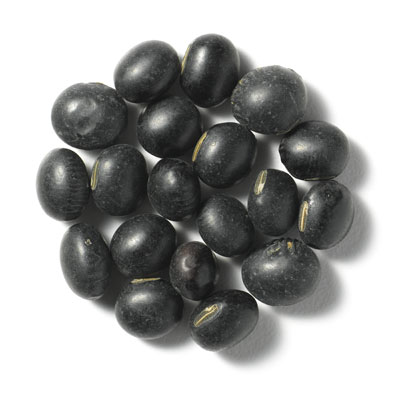
What are Black Soybeans?

I've been hearing a lot about black soybeans in the news (This is mostly due to Dr. Oz's show). I wanted to do some investigating to see how good they really are.

What Are They?
Black soybeans are simply a variety of soybeans, which are seeds from a plant. I found it to be very interesting that mature, dried soybeans can be a variety of colors, including black, brown, and blue. Fresh, undried, soybeans are always green in color.

What Are The Health Claims?
"Eating black soybeans helps you to lose weight, easily, lower cholesterol, and fight inflammation."

What Does the Science Say?
The National Institute of Health's study shows that consumption of various beans may inhibit oxidative stress. Black soybeans showed the greatest improvement in risk factors associated with cardiovascular disease. This study was only conducted on rats thus far. The most consistent effect of soybeans on blood fats has been a moderate lowering of LDL (bad) cholesterol.

Comparison to Regular Soybeans
Black soybeans have less calories, total fat, carbohydrates, and sugars. Regular soybeans, on the other hand, have more fiber and protein.

Health Benefits
Soybeans, in general, are a good source of Vitamin K, Calcium, Magnesium, Iron, Folate, Phosphorus, Potassium, and Fiber. Black soybeans, however, have a higher antioxidant content.

To sum it all up, all types of beans are a great choice for both a vegetable and protein source. Black soybeans have a slightly higher antioxidant content; however, it is not such a big deal if you eat regular soybeans in their place.

Final Bean Tips
-Throw some beans into a soup or stew for a protein boost.
-To use as a simple side dish, cook (sauté, stir-fry, boil, etc) and season with olive oil, onions, and garlic.
-Make "nuts" by roasting chickpeas in the oven. Mix 1 can of chickpeas with 1 Tbsp. olive oil, garlic, salt, and pepper. Spread over a baking sheet and bake at 400 degrees F for 20 minutes. Enjoy as a quick snack!


¨http://www.whfoods.com/genpage.php?tname=foodspice&dbid=79¨http://caloriecount.about.com/calories-seneca-organic-soy-beans-i108429


Monday, September 30, 2013

Health Benefits of Chia Seeds

There's been a lot of hype about chia seeds lately. What are they? What are the health benefits? How the heck do you eat them?!

Let's jump into the research and see what these seeds can do for you!

What are Chia Seeds?
Chia seeds come from the desert plant "Salvia hispanica,"which is grown in Mexico.  They are powerful antioxidants that fight off free radicals in the body.

Fun fact: the word "chia" means strength and these tiny seeds were thought to be great energy boosters.

Health Benefits
Chia seeds are an excellent source of:
 -Omega-3 Fatty Acids (4,915mg per 1oz.); help to improve brain health and decrease inflammation in    the body.
 -Protein (4g per 1oz.); energy source; needed for muscle and blood formation.
 -Fiber (11g per 1oz.); helps improve digestive function; decreases inflammation in the body.
 -Calcium (18% of Daily Value in 1oz.); needed to keep bones healthy and prevent osteoporosis.
 -Phosphorus (27% of Daily Value in 1oz.; ); aids in energy metabolism; also needed for bone health.
 -Zinc (7% of Daily Value in 1oz.); boosts immune function.
 -Manganese (30% of Daily Value in 1oz.); essential mineral needed for bone formation; helps your body use essential B vitamins.

Research has shown chia seeds to help improve blood lipid levels (decreasing LDL and triglyceride levels) and decrease blood sugar spikes by slowing digestion.

How to Eat
There are many ways to eat chia seeds. They can be eaten raw (sprinkled on salads, cereal, sauces, vegetables, yogurt), baked in dishes (breads, muffins, etc), or  mixed with water to form a gel (good as an egg substitute).

To Use As An Egg Substitue
-Mix 1 tablespoon of chia seeds with 3 tablespoons of water. Let sit for 15 minutes.

Granola With Chia Seeds
-Combine: 1 cup oats, 2 tbsp chia seeds, 2 tbsp honey, 1 tbsp oil, cinnamon, and nutmeg. Spread evenly onto a sprayed baking sheet. Bake at 300 degrees F for 15 minutes.


www.webmd.com/diet/features/truth-about-chia
www.eatright.org/public/content.aspx
nutritiondata.self.com/facts/nuts-and-seed-products

Tuesday, August 6, 2013

Juicing Recipes and Pulp Muffins

This week, I had the pleasure of trying out a Ninja blender and Jack LaLanne juicer for a smoothie/juice table at work. Let's just say I am very much addicted to the both! I tried out a bunch of different recipes and combinations; however, there were a few that went over really well with the members (that I had come by my table), my family, and myself.

Strawberry Pineapple Smoothie
-1 mango
-1 banana
-1 cup berries
-1 cucumber
-1 cup pineapple
-1 orange
-2-3 cups of spinach/kale
-ice/water

*Since there is a lot of fruit in the smoothie, I suggest blending spinach, kale, and water, then adding in fruit to taste. Once you get over the green color, it is really great! I liked the mango taste better, so when I made it a second time, I added more mango and eliminated the banana.

Bunny Juice
-10 carrots
-3 apples
*For this recipe, I used the juicer. I did the carrots first, then added apples to taste.

Apple Banana Berry
-2 apples (juiced in the juicer first)
-2 bananas
-2 cups of berries
-water and ice
*For this recipe, I didn't add vegetables because of the green color. I was serving to kids, so green didn't go over so well. You can add spinach/kale, cucumbers, or beets for a vegetable punch.

Green Machine Juice
Juice 2 lemons, 1 cucumber, and 2 apples. Add to a blender with 2 cups spinach/kale.

My Experimentation Phase
(The monster is a prop for a nutrition class)
After using the juicer, I didn't want to just throw away the pulp, which contains all of the fiber. So, I decided to make muffins! Besides muffins, you can use pulp for vegetable stock, sauce for mac n' cheese, or mixed in another smoothie drink.


Juicer Pulp Muffins
Ingredients
-4 cups of pulp
-1/4c honey (I used a little less than 1/4c)
-3 eggs
-1 teaspoon vanilla
-1 cup coconut or olive oil ( I used about 1/2-3/4 cup because my pulp was a bit thinner)
-3 cups flour (I used 2 cups coconut flour and 1 cup white flour. You can also use almond flour.)
-1 teaspoon baking soda
-1 teaspoon nutmeg, or cinnamon (I used both, plus a little extra)

Directions
1. Mix together the first 5 ingredients. 
2. Add flour, baking soda, and cinnamon to wet ingredients. 
3. Grease muffin pans. Bake muffins at 350 degrees for 45 minutes.

Apple-Carrot Pulp Muffins
Ingredients
-2 cups pulp
-1 1/2 cup almond meal
-1/4 cup flaxseed
-1/2cup coconut palm sugar (I eliminated this)
-1 teaspoons baking powder
-dash salt
-dash cinnamon
-4 eggs
-2 teaspoons vanilla
-1/4cup honey (I used only about 1 tablespoon of honey)

Directions
1. Mix together all wet ingredients. 
2. Mix together all dry ingredients. Add wet to dry. (Can also add chopped walnuts).
3. Fill paper lined muffin tins with pulp mixture. 
4. Bake 25-30 minutes at 325 degrees.

I found the juice to be both filling and nutritious. It is a great way to sneak in some fruits and vegetables with cancer-fighting antioxidants. For a protein boost, try adding almond milk or protein powder to the recipes.

 Happy juicing!

Sunday, June 30, 2013

Tips for Decreasing High Blood Pressure

The first leading cause of death in the US is heart disease and the third leading cause of death is stroke. Having high blood pressure (hypertension) increases your risk of developing both heart disease and stroke. High blood pressure can also result in congestive heart failure, kidney disease, and blindness. High blood pressure makes your heart work harder and contributes to atherosclerosis (hardening of the arteries). While genetics plays a role in the development of high blood pressure, there are still things that you can do to decrease your risk.

What is Blood Pressure?

Blood pressure is the force exerted by the blood on the walls of the vessels during contraction and relaxation. The numbers in your blood pressure reading tell how hard your heart is working to pump blood. A blood pressure of less than or equal to 120/80 is considered normal. A blood pressure of 140/90 or higher is considered high. 

Weight Reduction

As body weight increases, blood pressure rises. The single most important factor in decreasing high blood pressure is weight reduction. Losing just 5 pounds can decrease blood pressure! 

Sodium

Eating excessive amounts of salt causes your body to retain more water. The increase in fluid circulating in the body causes an increase in pressure on the blood vessels. The blood vessel walls begin to thicken and the heart has to work harder to move fluid around, leading to high blood pressure. Aiming for 1,500mg of sodium can help to manage high blood pressure. Sodium is found in processed foods like deli meats, soups, and frozen meals.

Potassium

A diet high in potassium helps to protect you from high blood pressure. Potassium inhibits the reabsorption of sodium in the body. It is recommended to consume between 2,000 and 4,000mg of potassium. Potassium can be found in many fruits (oranges, tomatoes, bananas, raisins, apricots) and vegetables (potatoes, peas, beans, broccoli, spinach).

Alcohol
Chronic consumption of more than 1 ounce per day of alcohol has been associated with higher blood pressure. Intake should be limited to 1-2 ounces of ethanol per day. This translates into 1 12-oz beer, 4oz wine, and 1oz of hard liquor.

Physical Activity 

Physical activity decreases your risk of high blood pressure by as much as 50%. Regular physical activity helps to strengthen your heart. As little as 30 minutes per day of physical activity can decrease blood pressure by 10mmHg.  Physical activity also helps with weight management.

Lastly, smoking cessation is an also a very important change to make when decreasing your risk of high blood pressure.


Happy heart health!


www.heart.org

Tuesday, June 25, 2013

How to Increase Your Metabolism

Let's set the scenario. You watch one of your best friends (spouse, boyfriend, etc) eat whole pizzas all the time, but, they never gain any weight! You, on the other hand, eat one piece of pizza and the next day, your pants don't fit! A little exaggerated, but I am sure most of you understand the feeling of seeing some people eat anything they want and never gain an ounce.

We are going to break down what metabolism is and what you can do to influence it. While genetics plays a role in your metabolic rate, there are still many things that you can do to help!

What is Metabolism?
Metabolism is the rate at which your body burns calories.

Factors Affecting Metabolism
1. Body size: Tall, thin people have higher metabolic rates than short, wide people.
2. Exercise
3. Age
4. Gender: Men have higher metabolic rates than women do. Sorry women.
5. Hormones
6. Exercise
7. Food/beverage intake
8. Sleep
9. Cold exposure: Studies have shown that frequent cold exposure (cold showers, cold drinking water, less bundling in the winter) increases metabolism.

Age
Your metabolism slows down as you age. What can you do about that? One thing you can do to avoid weight gain is to decrease the amount of calories you consume.

Hormones
Women, your metabolism fluctuates throughout your menstrual cycle. This is the reason why at certain weeks you are eating everything in sight. Pregnant women, during the second half of pregnancy, metabolic rate increases due to fetal growth and the mother's increased cardiac workload.

Exercise
Athletes with greater muscle mass have a 5% higher metabolic rate than non-athletes. This is largely due to their increased fat free mass.  By participating in strength training exercises (chest press, overhead press, lat pulldown, etc), you are increasing your resting metabolism. This means that you are increasing the amount of calories you burn after exercising. This effect can last for up to 24 hours.  High intensity interval training has also been shown to increase metabolism for 2-3 hours after exercise.  Lastly, having more muscle in general will boost your metabolism because of the calories needed to maintain them.

Food/Beverage Intake
Spicy foods and caffeine both stimulate your metabolism. Meals with chili may increase metabolic rate as much as 33% for a span of 3 hours. By ingesting caffeine every 2 hours for 12 hours, your metabolism is boosted by about 10%. Green tea has also been well known for the benefits of EGCG, which boosts metabolism. What's the catch? You can only reap the benefits of green tea by regular consumption of 5-6 cups of green tea per day.

Sleep
It is important to try and get in about 7-8 hours of sleep per night. While resting, your body burns calories performing basic processes (repairing damaged tissues, breathing, pumping blood). Your resting metabolism accounts for about 65% of your daily calorie burning.  With chronic lack of sleep, your metabolic function becomes altered and slowed.

To sum it all up, the major factors in increasing metabolic rate are exercise and sleep. While coffee, spicy foods, and green tea can help boost metabolism, the amount you have to consume on a daily basis  is quite high. The best ways to boost metabolism are to be mindful in caloric changes (decreasing calories as you age), using strength exercises, and getting enough sleep every night.


http://www.hindawi.com/journals/ije/2010/270832/
http://www.nytimes.com/2011/01/11/science/11qna.html?_r=0
Mahan L, Escott-Stump, S. "Food, Nutrition, and Diet Therapy." Saunders. 2004. http://www.ncbi.nlm.nih.gov/pubmed/17906191
http://www.webmd.com/diet/features/increase-your-metabolism-start-losing-fat

Friday, June 21, 2013

Eat This, Not That: Supermarket Edition

There are thousands of options when you go to the grocery store. Just peak down the cereal aisle and you will see at least 50 different options. Which ones are the healthiest?! Welcome to Eat This, Not That Supermarket Edition!

Cereals
Eat This: Kashi GOLEAN
               140 calories, 1g fat, 0g saturated fat, 6g sugar, 10g fiber
Not That: Post Banana Nut Crunch

               240 calories, 6g fat, .5g saturated fat, 12g sugar, 4g fiber
-Two key things to look for on the cereal label are high fiber and low sugar.

Yogurt
Eat This: Dannon Light and Fit Strawberry Yogurt
               60 calories, 0g fat, 90mg sodium, 7g sugar
Not That: Dannon Fruit on the Bottom Strawberry Banana

               150 calories, 1.5g fat, 1g saturated fat, 95mg sodium, 26g sugar

-Two key things to look for in yogurt are low sodium and sugar and high protein.

Breakfast Meats
Eat This: Banquet Brown'N Serve Turkey Sausage
               110 calories, 7g fat, 2g saturated fat, 380mg sodium
Not That: Banquet Brown'N Serve Original Links

               200 calories, 18g fat, 6g saturated fat, 490mg sodium

-Two key things to look for with breakfast meats are low saturated fat and sodium.

Peanut Butters
Eat This: Simply Jif
Not That: Skippy Creamy

               -Both have similar amounts of calories and fat; however, the natural peanut butters don't have added sugars.

Soups
Eat This: Campbell's Healthy Request Tomato Soup
               90 calories, 1.5g fat, .5g saturated fat, 400mg sodium
Not That: Campbell's Tomato Bisque Soup

               130 calories, 3.5g fat, 1.5g saturated fat, 880mg sodium
-Two key things to look for in soups are low sodium and saturated fat.

Nuts
Eat This: Raw Pistachios or Whole Natural Almonds
               -Pistachios provide phytosterols that decrease bad cholesterol
               -1 oz. almonds provides half of the Vitamin E you need in a day
Not That: Planter's Dry Roasted Peanuts

               -Peanuts are the lowest nut in nutritional value with minimal antioxidants.

-Don't worry about the fat content for nuts. Most of this will (should) come from the monounsaturated fatty acids.

Frozen Entrees
Eat This: Healthy Choice Chicken Broccoli Alfredo
               300 calories, 5g fat, 2g saturated fat, 430mg sodium
Not That: Maria Calendar's Fettucine with Chicken and Broccoli

               630 calories, 37g fat, 15g saturated fat, 900mg sodium
-Two key things to look for with frozen entrees are low sodium and saturated fat.

Cheese
Eat This: Athenos Traditional Feta 
               80 calories, 6g fat, 3.5g saturated fat, 330mg sodium
Not That: Treasure Cove Blue Cheese

               100 calories, 8g fat, 5g saturated fat, 380mg sodium

-Two key things to look for with cheese are low saturated fat and sodium.


When reading a food label, remember to look at the protein, fat, fiber, salt, and carbohydrate content. Also, sugar should not be one of the first 4 ingredients listed on a food label. 

As a final note, try to shop the outside perimeters of the grocery store as much as possible (that is where all the healthy foods are)!


Zinczenko D. Eat this not that. New York, NY. 2008. 

Thursday, May 23, 2013

How to Preserve Nutrients in Cooking

Raw or cooked vegetables? Microwaved or steamed? Does it make a difference? Actually, the method of cooking does affect different types of vegetables in both a positive and negative way. For example, when cooking tomatoes, the bioavailablity of Lycopene (a carotenoid with antioxidant properties) is increased; however, the amount of Vitamin C decreases.

Microwaving
There is a lot of debating going on over microwaving vs. using a conventional oven. Some say microwaving is the devil because of nutrient loss and cancer causing properties. Some nutrients are broken down when they are exposed to heat. So, is microwaving better than cooking vegetables in a convention oven? Since both use heat to cook, and microwaving takes a shorter amount of time to cook food, it is a slightly better option than cooking in the oven.

Frying
Frying is probably one of the worst ways to cook your vegetables. The heat is so high that almost all nutrients are immediately destroyed.  Frying also causes the release of free radicals, which are detrimental to your health.

Boiling
Boiling is probably the second worst way to cook your vegetables, unless you plan on using the remaining broth. When you boil vegetables, all the nutrients leak out into the water. Since many people do not save the water from the vegetables, you are not getting the benefits of the cancer fighting properties they hold.

Steaming
Steaming is the gold standard for cooking vegetables. Steaming helps to retain the nutritional value of your vegetables. Some key things to remember when steaming are: don't use too much water (1/2 cup is usually good) and don't overcook (5-7 minutes is usually good for most vegetables).

Raw Food 
Just to clarify, I am only speaking about eating certain foods raw, like vegetables, not the raw food diet, where a person will only eat raw foods (no meats, fish, etc). Studies have shown that both raw and cooked vegetable consumption are inversely related to epithelial cancers, lung cancer, and breast cancer; however, these relationships may be stronger for raw vegetables than cooked vegetables.

Degradation of Vitamins & Minerals
Once vegetables are picked, their vitamin and mineral content begin to degrade. To slow this process, most vegetables should be refrigerated until they are used.  Also, many vitamins are easily destroyed by oxygen. In order to minimize nutrient loss, cut vegetables should be stored in airtight containers in the refrigerator. Just to keep in mind, after about 24 hours in the fridge, cooked vegetables will lose 1/4 of their Vitamin C content. Vitamin C is the most likely vitamin to be lost in cooking. It is very sensitive to heat, air, and water. To minimize nutrient loss, cook in as little water as possible.


The bottom line is, whether you are eating your vegetables raw or cooked, at least you are consuming vegetables!


Monday, May 20, 2013

Fun Fruit and Vegetable Facts

Did you know that banana trees are not trees? The banana plant is actually a giant herb. Today's blog features fun facts about different fruits and vegetables!

Avocados
-One avocado tree can produce up to 400 avocados a year! 
-Avocados are a good source of Vitamin C, potassium, magnesium, folate, and fiber. They are also high in Vitamin E.

Strawberries
-Ever wonder how many seeds were on your strawberry? On average, there are 200!
-Strawberries are not truly a berry, despite their name. 
-Strawberries are a good source Vitamin C, potassium, and fiber.

Kiwi
-Kiwi can be used as a meat tenderizer. Cut the fruit in half, rub over meat, and leave for 10-15 minutes. 
-The brown fuzzy skin is edible!
-Kiwi are a good source of Vitamin C and E, potassium, and fiber.

Cranberries
-Native to North America. They were deemed the name "cranberry" because the flowers resemble cranes.

Broccoli
-The name broccoli comes from the Latin word brachium, which means "branch" or "arm"
-Broccoli is a good source of Vitamin A, folate, iron, calcium, and fiber.
-Ounce for ounce, Broccoli has more vitamin C than an orange and as much calcium as a glass of milk.

Nectarine
-The nectarine is actually a subspecies of peach that lacks the gene for fuzz. 

Cabbage
-Cabbage needs to be kept cold in order to retain its Vitamin C.

Carrots
-Pick carrots that are dark orange in color (more beta-carotene).
-Carrots are a good source of fiber, beta-carotene, and Vitamin A.

Tomatoes
-They are technically a fruit; however, they are prepared and eaten like vegetables.
-The French used to refer to the tomato as the "apple of love."
-Tomatoes are a good source of Vitamin A and C. 

Apples
-Ever wonder why apples float? They are good for apple bobbing games because they are 25% air!

Pineapples
-You can speed up the ripening of a pineapple by standing it upside down (on the leafy end).

EXTRA Food Facts
-In ancient Greece and Rome, fava beans were used in voting; a white bean was used to cast a yes vote, and a black bean for no
-Pinch your nose and eat an onion, apple, and potato. They will all taste sweet. The difference in flavor is caused by their smell.

Thursday, May 9, 2013

Monounsaturated Vs. Polyunsaturated Fats

In my last blog, Saturated Fat Vs. Trans Fat, I talked about the unhealthy fats in our diet. As I stated before, you need fat in your diet! Fat is necessary for brain development, insulation, cushion of organs, and absorption of fat-soluble vitamins (Vitamins A, E, D, K).

The two main healthy fats are monounsaturated (MUFAs) and polyunsaturated fats (PUFAS).  MUFAs and PUFAs are found in a variety of foods and oils and are typically liquid at room temperature. Studies have shown that eating foods rich in MUFAs and PUFAs improve blood cholesterol levels, decrease your risk of heart disease, and benefit insulin levels and blood sugar control (helpful for Type 2 Diabetes).

Polyunsaturated fats are further broken down into two categories: omega-6 and omega-3 fatty acids. Omega-6 and omega-3 are essential fats because our bodies need them but cannot make them. Omega-6 and omega-3 EFAs are important for brain function and normal growth and development.

Humans evolved on a diet with a ratio of omega-6 to omega-3 essential fatty acids (EFA) of 1 to 1. In the typically Western diet, the ratio of omega-6 to omega-3 EFAs is about 15 to 1. This excessive consumption of omega-6 EFAs has lead to the promotion of cardiovascular disease, cancer, and inflammatory diseases. Studies have shown that an increase of omega-3 EFAs will suppress these negative effects. Omega-3s have also been found to decrease the risk of coronary artery disease, lower blood pressure, decrease triglyceride levels, reduce blood clotting, reduce symptoms of depression, protect against memory loss, ease arthritis, and boost immunity.

Food Sources of Monounsaturated Fats
-Olive, canola, peanut, sesame, and sunflower oils
-Avocados
-Peanut butter
-Nuts and seeds

Food Sources of Polyunsaturated Fats
-Corn, safflower, soy, nut, and cottonseed oils
-Nuts and seeds
-Fatty fish (trout, herring, salmon, tuna) (Omega-3s)
-Flaxseeds (Omega-3s)

The American Heart Association recommends eating fish at least 2 times per week. If you are unable to consume enough omega-3 EFAs from your diet, you should consider a fish-oil supplement. In general, aim for a supplement between 500 and 3,000mg of EPA/DHA. For maximum absorption, take your supplement with food.

Recipes and Cooking Ideas
-Sauté onions with eggs and avocado.
-Substitue flax seed oil for another cooking oil.
-Try a slice of avocado on a sandwich or make guacamole.
-Substitute ground nuts in place of breadcrumbs.
-See my peanut butter ball recipe for a way to incorporate flax seed in your diet!


References:
http://www.ncbi.nlm.nih.gov/pubmed/12442909
http://www.mayoclinic.com/print/omega-3/HB00087/METHOD=print
http://www.nlm.nih.gov/medlineplus/druginfo/natural/993.html

Monday, May 6, 2013

Saturated Fat Vs. Trans Fat

Fats have certainly gotten a bad rap in the past few years. The new health craze has pushed for even more low-fat products.  But then again, some fats are good. This back and forth on fat sure makes it hard for consumers to know what to eat. Yes, you do need fat in your diet. It is essential for hormones, insulation, and protection of your organs from damage. The truth is that you do not need as much fat as you think. Also, the quality of the fat you eat is important. I am just going to focus on the two major harmful fats, Trans fat and Saturated fat. The healthy fats, Monounsaturated and Polyunsaturated, will be covered later. 

What Are Saturated Fats?
Saturated fats are mainly found in animal products and are typically solid at room temperature. Their chemical makeup consists of carbon atoms that are saturated with hydrogen atoms (hence the name "saturated" fat). The American Heart Association recommends limiting your intake of saturated fats to less than 7% of total calories. If you are consuming a 2,000 calorie per day diet, your intake of saturated fat would be less than 16 grams. 

Where Do You Find Saturated Fats in Foods?
Saturated fats occur naturally in many foods. Some examples include fatty beef, pork, and poultry with skin. Saturated fat is also found in butter, cheese, ice cream, and other dairy products made from whole or 2% milk. Many baked and fried foods contain high levels of saturated fats. 

Why Are Saturated Fats Harmful?
Saturated fat raises total blood cholesterol and LDL (bad) cholesterol levels. This increases your risk of heart disease and stroke. Studies have shown that saturated fat may also increase your risk of developing type 2 diabetes. 

What Are Trans Fats?
Trans fats are made during food processing through the partial hydrogenation of unsaturated fats. Hydrogenation basically means that hydrogen atoms are added to the carbon atoms. This process creates a product that is less likely to spoil, which increases the shelf-life of many foods. The American Heart Association recommends limiting your trans fat intake to less than 1% of your total calories. If you are consuming a 2,000 calorie per day diet, your intake of trans fat would be less than 2 grams. 

Where Do You Find Trans Fats?
Trans fat is found mainly in processed foods. Examples include cookies, crackers, cakes, some stick margarines, fried foods (donuts, French fries), chips, candy, and frozen dinners. When reading nutrition labels, look for the words "partially hydrogenated" in the ingredient list. Any oil that is partially hydrogenated is a trans fat. Be aware of the "0 Trans Fat" products. The FDA allows that phrase to be on any product with .5 grams of trans fat per serving. Since many people do not stick to serving sizes, they may be consuming more trans fat than they think. 

Why Are Trans Fats Harmful?
Trans fats raises your LDL (bad) cholesterol and lowers your HDL (good) cholesterol, a double whammy! Trans fats increase your risk of developing heart disease and stroke. Trans fat also increases blood triglyceride levels, which leads to hardening of the arteries (atherosclerosis). Studies have also shown that trans fat increases inflammation by damaging the cells lining your blood vessels. 

Tips for Lowering Saturated and Trans Fat
1. Eat a balanced diet rich in fruits and vegetables (no trans/saturated fat!).
2. Choose leaner cuts of meat and trim visible fat before cooking.
3. Remove the skin from chicken, turkey, and other poultry.
4. Drink low-fat or skim milk rather than whole or 2%. You will still be getting the same amount of calcium.
6. Decrease your intake of fast food. Many fast food restaurants still use partially hydrogenated oils for frying. 
7. Consume monounsaturated fat (olive oil) and polyunsaturated fat (soybean, sunflower oil).

Remember, not all fat is bad. You need fat in your diet! Also, be aware of the low-fat products. These so-called-healthy products simply swap saturated and trans fat for sugar. When in doubt, it is better to opt for a little fat over a lot of sugar. 

Thursday, April 25, 2013

Salt: The Silent Killer

Put down the salt shaker and slowly walk away! Those pure, white crystals look so innocent as they gleam in the shakers. Appearances sure are deceiving since high intake of salt is a major cause of high blood pressure, which ultimately leads to heart attacks and strokes. Just 1 teaspoon of salt contains about 2,400 mg of sodium. That is almost double the recommendation of 1,500mg of sodium (American Heart Association).

You may be thinking "I don't add salt to my foods, so I can't possibly be consuming that much sodium." Think again! About 77% of sodium comes from processed foods and foods eaten outside the home. The foods that contribute the most sodium, because of their frequent consumption, are: bread, cheese, deli meats, cakes, canned soup, and cookies. Even those "healthy" frozen dinner meals are prime suspects of high sodium content. 1 package of Boston Market's Homestyle Meal Beef Sirloin contains 2,270mg of sodium. 1 bowl of Uncle Ben's Teriyaki Chicken Rice contains 1,450mg of sodium.  Most restaurant meals provide more than a whole day's worth of sodium! For example, General Tso's chicken with rice contains 3,150mg of sodium.

Why is salt used if it leads to such horrible things, like high blood pressure, heart attacks, and strokes? In some foods, salt is used to help bacterial growth. It is also used to mask "off-flavors that develop during high-temperature processing and long storage.

Ready to shake the salt habit?! Look below for some tips on cutting back on your sodium! Your heart will thank you later.

Tips for Cutting Back on Your Sodium:
-Read the food label! Check how much sodium, per serving is in the product. Watch for the words "soda" and "sodium."
-Taste your food before salting it. Some people have a habit of adding salt, before they even taste the meal.
-Buy fresh, frozen, or canned vegetables "with no salt added."
-Choose "convenience" foods that are lower in sodium. Cut back on frozen dinners, pizza, packaged mixes, and canned soups or broths.
-Rinse canned foods, such as tuna, to remove some sodium.
-Try herb-seasoning packets or other spices in place of salt.

Home-Made Herb Seasoning
Combine all ingredients below in a shaker:
-1 teaspoon celery seed, ground
-2 1/2 tsp. marjoram, crushed
-1 1/2 tsp. thyme, crushed
-1 1/2 tsp. dried basil, crushed
-1/2 tsp. black pepper
*You can mix and match tons of different herbs!